Binghatti Cullinan is the flagship project of developer Binghatti and embodies the concept of premium waterfront living, where the tranquility of historic Dubai Creek meets the dynamism of modern metropolis aesthetics. At the heart of the project is the idea of rarity and uncompromising quality, emphasized by architectural plasticity and sculptural facades. Developed as a reference point for those seeking a combination of status, privacy, and proximity to all key Dubai locations, the complex offers structured comfort and a unique living environment that creates a sense of conscious, deeply harmonious living.
According to official materials, Cullinan is positioned as a combination of high city rhythm and the tone of absolute silence. Here, value is expressed not in loudness but in precise detailing, where every element of the environment is organized for ease and internal balance. Spaces are developed in accordance with the philosophy of rarity, where architectural form serves not just as an aesthetic symbol but as a functional shell creating a protected inner world for residents.
Evidence of this is not only the scale of the project and thoughtful infrastructure but also the location, which combines access to key transport arteries with the preserved character of the Al Jaddaf area. Binghatti Cullinan appeals to those who value rare living formats where privacy combines with urban accessibility, and architecture becomes an extension of the idea of life without overload. This is not just a collection of apartments but a living structure where rarity defines quality, and quality creates a new level of status.
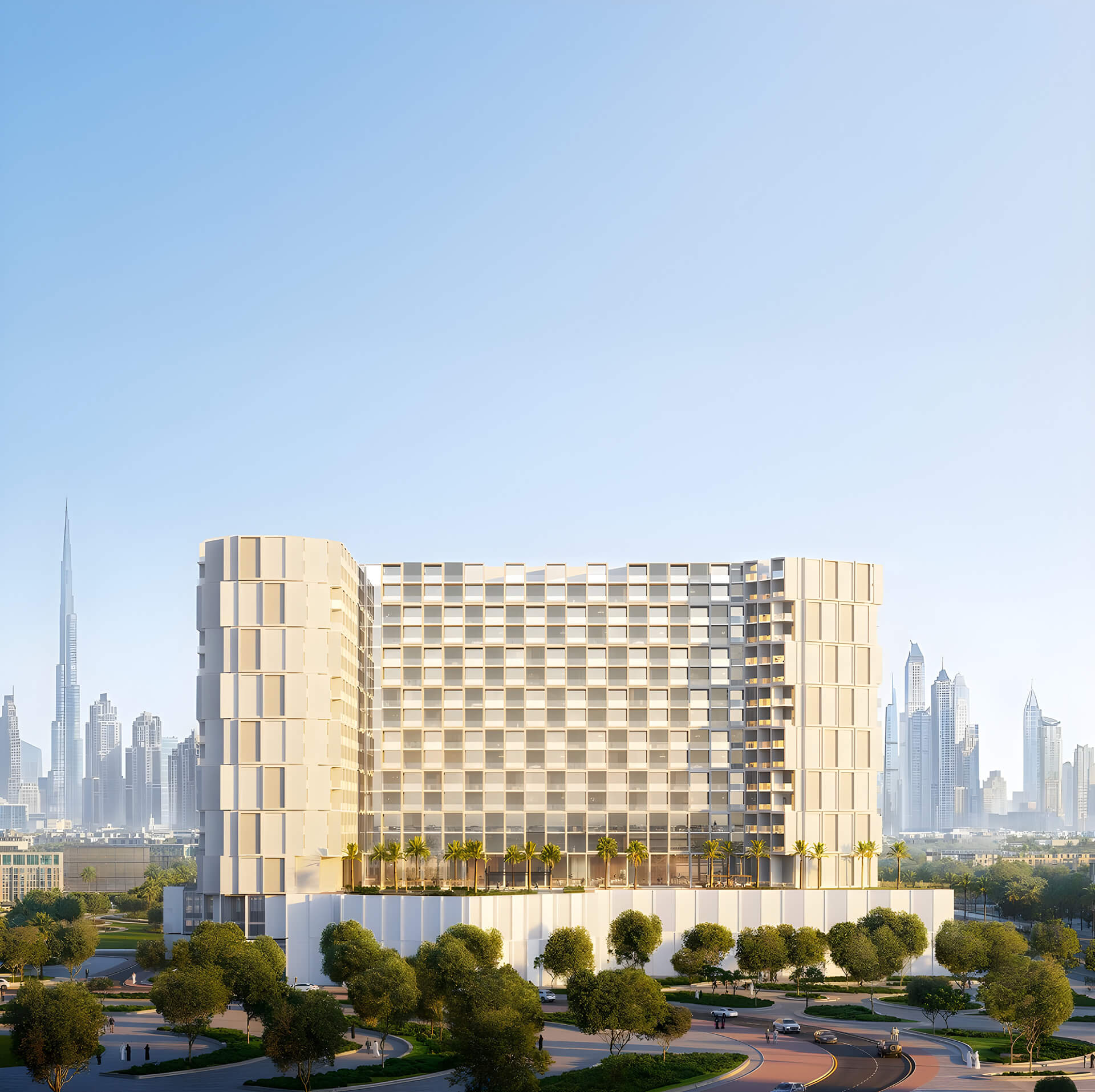
Binghatti Cullinan is located in the historic Al Jaddaf district, on the shoreline of Dubai Creek, where the natural rhythm of the water surface softens the sound of the city. The location stands out for its rare balance: just 3–5 minutes to Burj Khalifa and Downtown, unobstructed access to Sheikh Zayed Road and Al Khail Road, and Dubai International Airport accessible within minutes. This combination makes Cullinan a focal point for those who value not only comfort and status but also rational mobility.
The area carries a distinct cultural-historical context, emphasizing the project's uniqueness. Here, the memory of Dubai's formation meets new architecture, where glass and light compose a single visual score with the waterfront line. Every landscape detail and every visual corridor creates a sense that the metropolis reveals itself softly, without pressure, offering space created not just for living but for contemplative presence.
According to the official project map, residents receive instant access to Dubai Opera, Dubai Mall, Design District, Meydan, and Museum of the Future. This guarantees not just convenience but accessibility to main points of urban culture. Binghatti Cullinan acts as a spatial connection between two worlds — natural and urban, historical and innovative. Here, routes are not imposed but revealed as opportunities, where every turn of the road leads to aesthetics and functional freedom.
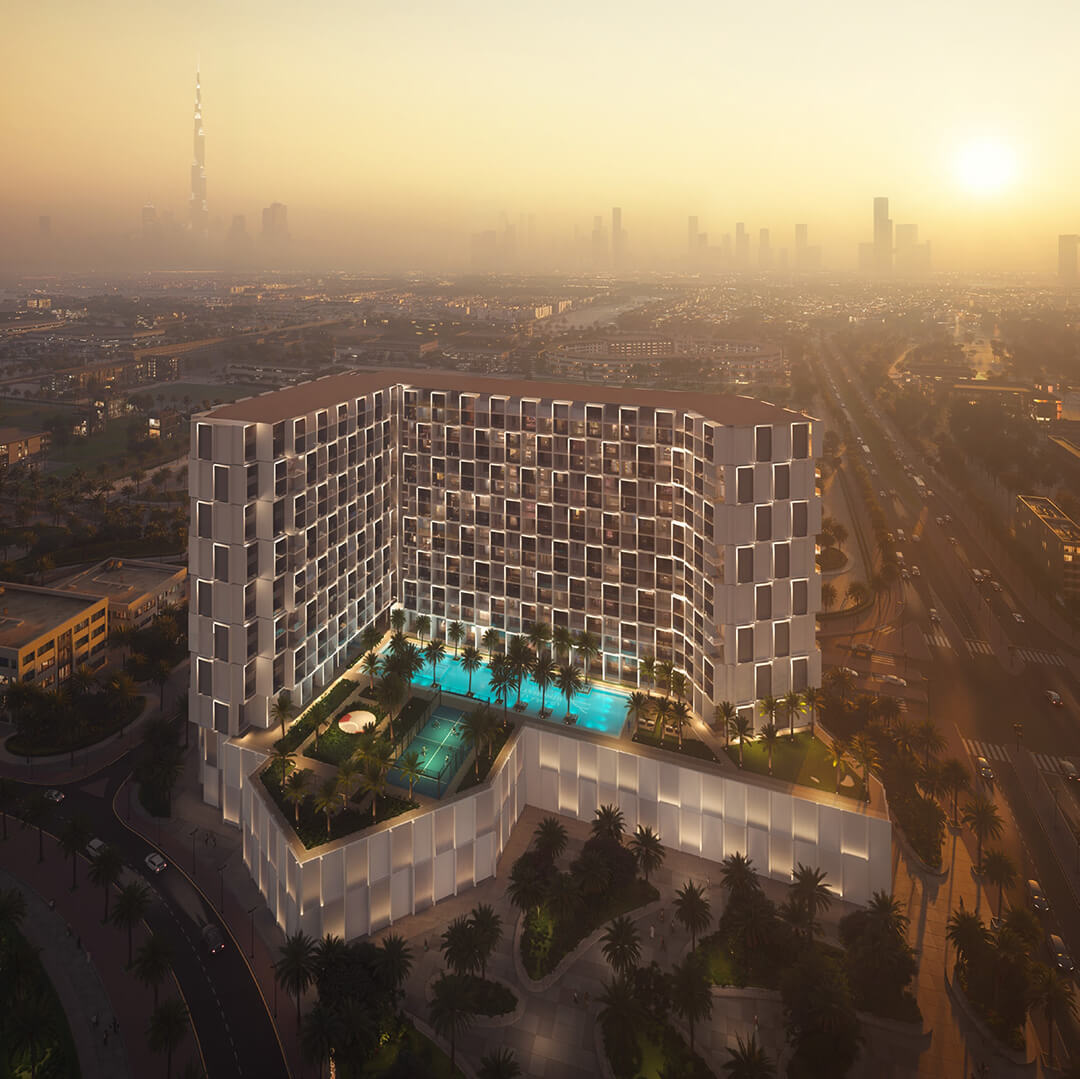
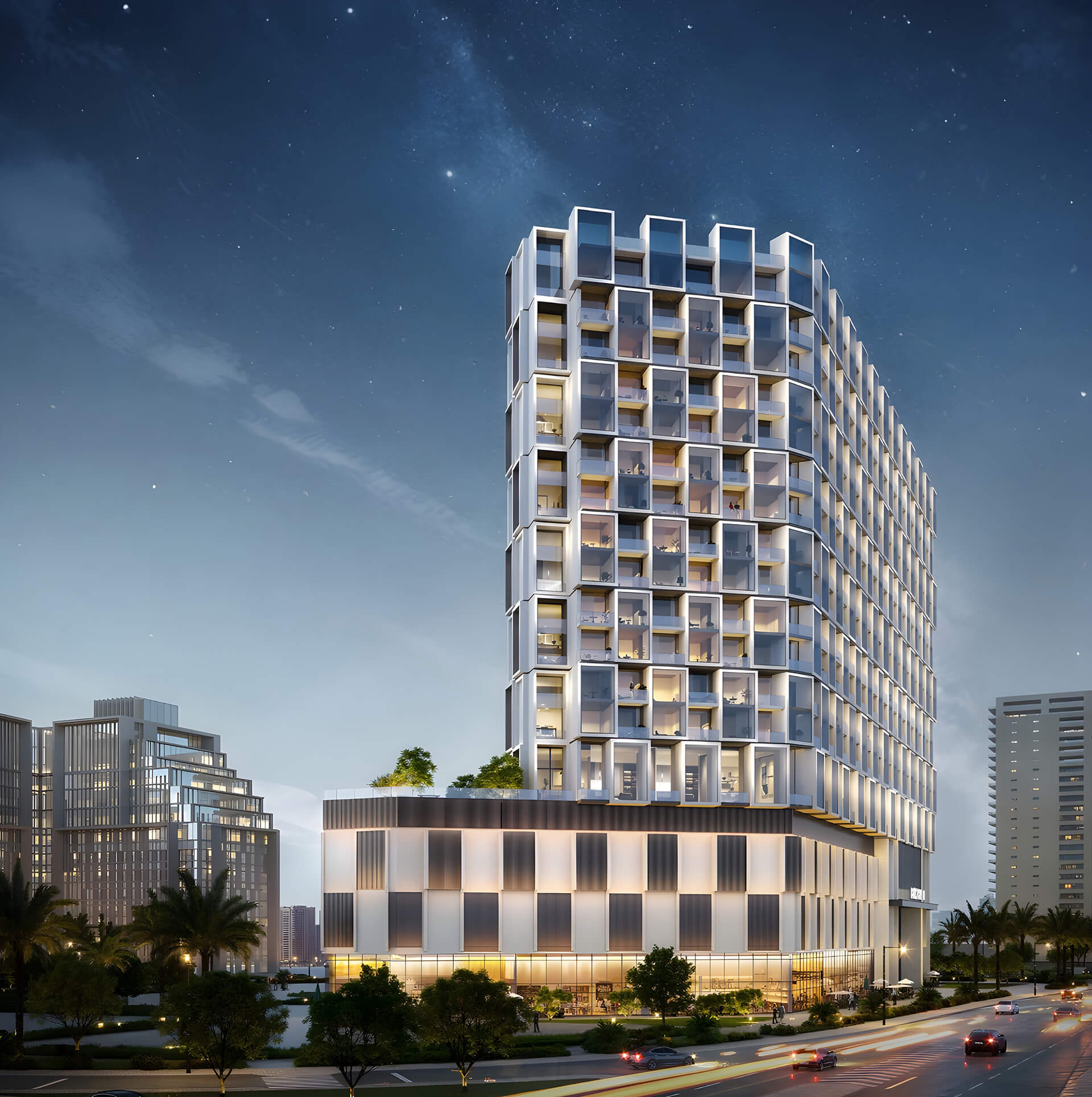
The architectural identity of Binghatti Cullinan is formed around an expressive curvilinear line that defines the visual rhythm of the entire complex. The crystalline glass facade creates a play of reflections, and geometric contrast of the grid enhances the volumetric-spatial strength of the building. The main idea of the form is to create a protected interior space where architecture becomes not an external declaration but a form that holds silence and light.
This plasticity emphasizes the connection with Dubai Creek and the water topography of the area. The external appearance of Cullinan does not strive for eccentricity but expresses discipline, geometry, and confident aesthetics of premium minimalism. Developers view the curve as an element of emotional architecture designed to gather space into a single gesture of comfort and clarity. This is not an abstract line but a meticulously verified fixed trajectory that sets stability to the visual image.
The visual dominance of the complex affirms its presence in Dubai's panorama and forms a new chord on the skyline. Binghatti Cullinan creates a recognizable silhouette that doesn't get lost among high-rise dominants but conveys its own, restrained character of architectural movement. This is an aesthetic where form doesn't compete but affirms its place. The building becomes not just an object but a multi-layered architectural construct where facade and light play the role of spatial tools gathering space into harmony.
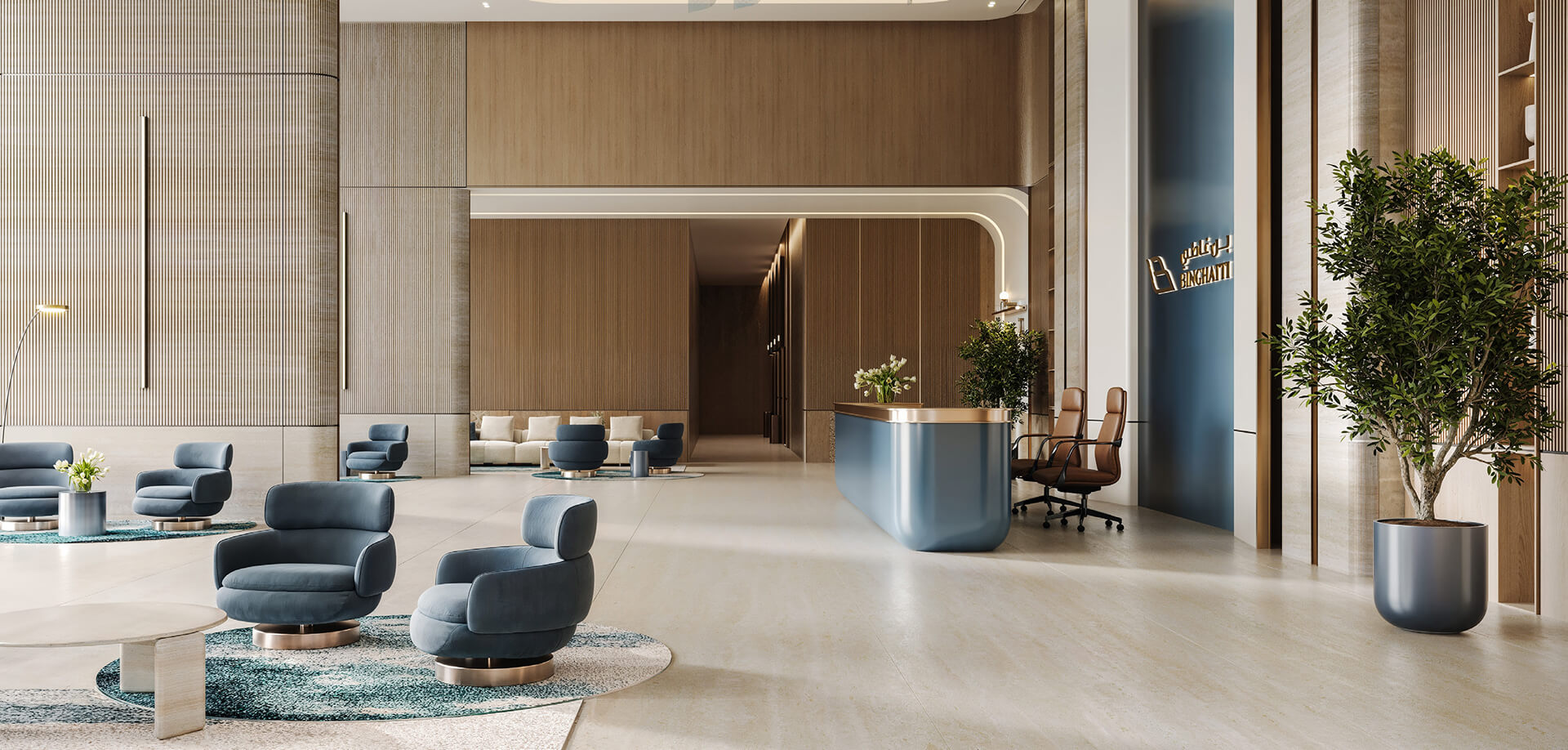
The interior solutions of the Binghatti Cullinan lobby form an emotional contour where silence becomes not emptiness but luxury. Soft tones, travertine, warm wood, and chrome create a calibrated palette of calmness. Light accents on ceiling installations enhance the idea of vertical movement, opening space upward and creating a sense of endless air. Here, every element breathes thoughtfulness and tactile delicacy.
The space is not overloaded with decor but organized through structural purity of lines and the natural rhythm of textures. The lobby serves not only as an entrance area but as an emotional filter between the city and home. Noise dissolves in neutral surfaces, and movement softens with smooth transitions. There are no random gestures here — every form emphasizes the dignity of space and its internal symmetry.
Just one line, one lighting, and one material can create a sense of protected peace. The lobby doesn't dictate but accepts, and in doing so, affirms the high level of service and cultural restraint of the project. Binghatti Cullinan demonstrates interiors where value is manifested not through the loudness of luxury but through its intellectual interpretation. This is not decoration but an environment creating a new type of privacy.
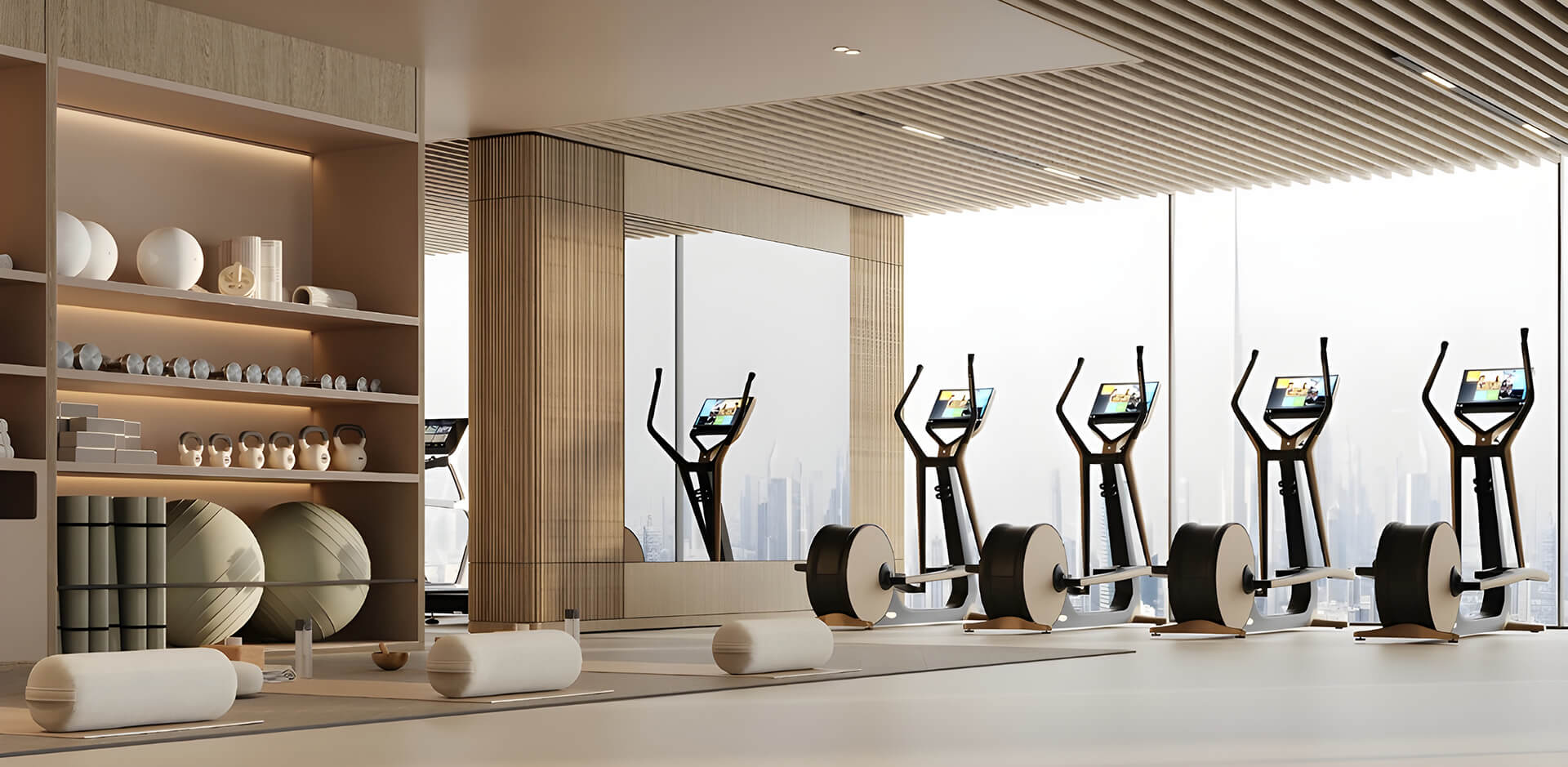
Cullinan's infrastructure is organized around the concept of rare comfort, where service becomes not an addition but an extension of the living environment. Residents have access to Binghatti's private services, including property management, unit resale, furniture packages, holiday homes, and annual maintenance services. This forms a closed-level ecosystem where every task is solved within one digital and managerial circuit.
Intelligent technologies are enhanced by a concierge model, creating a high-status lifestyle format. Here, service is not noticeable because it is embedded. Residents receive a protected system where security, management, smart home digital functions, and service support are manifested as a single mechanism. This environment works not reactively but anticipatorily.
Cullinan's infrastructure doesn't declare luxury — it forms it. This is a level where all functions are combined in one branded management and form a format characteristic of premium residences of the new generation. Life becomes not a task but a process, relieved of burden.
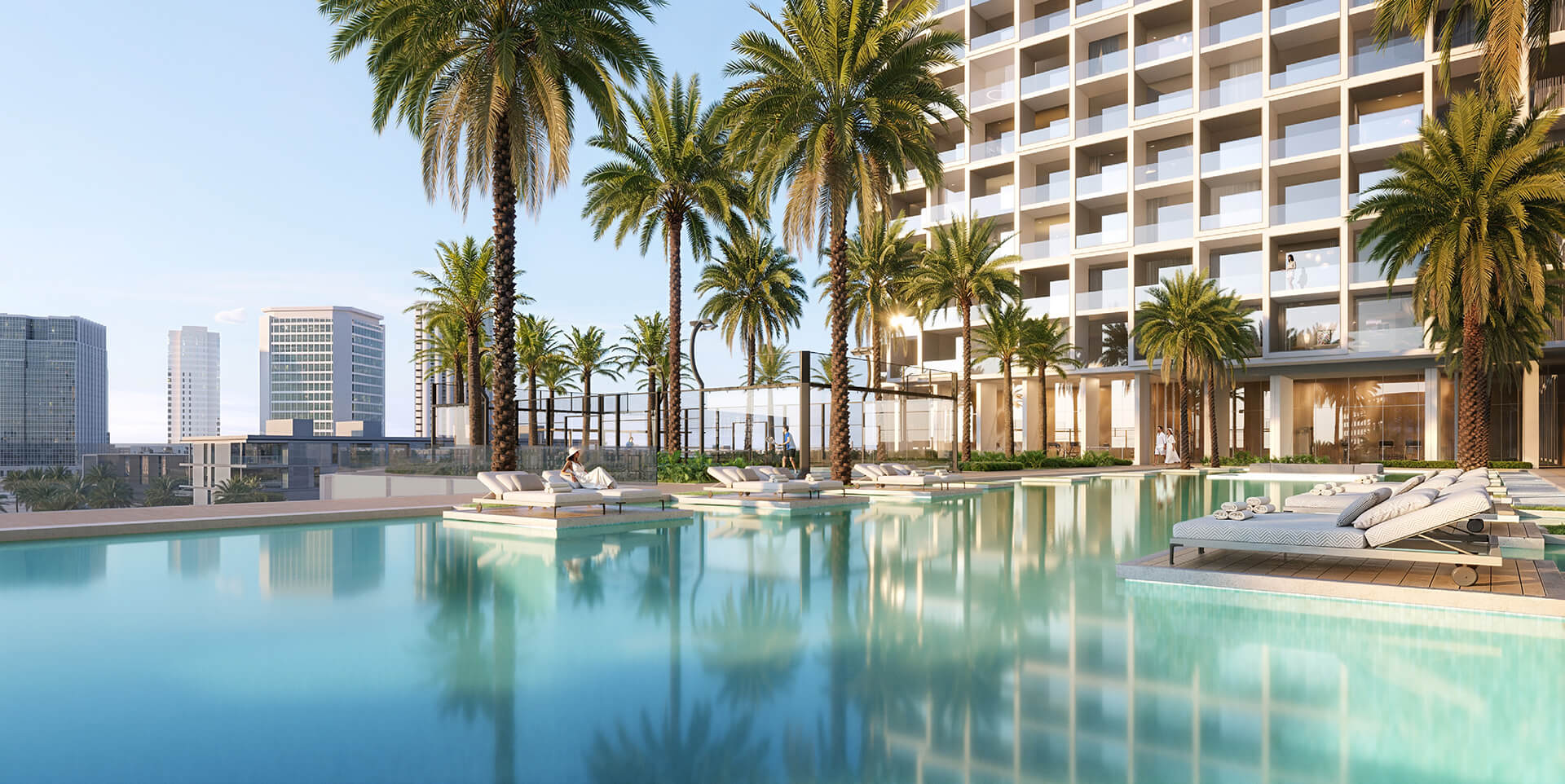
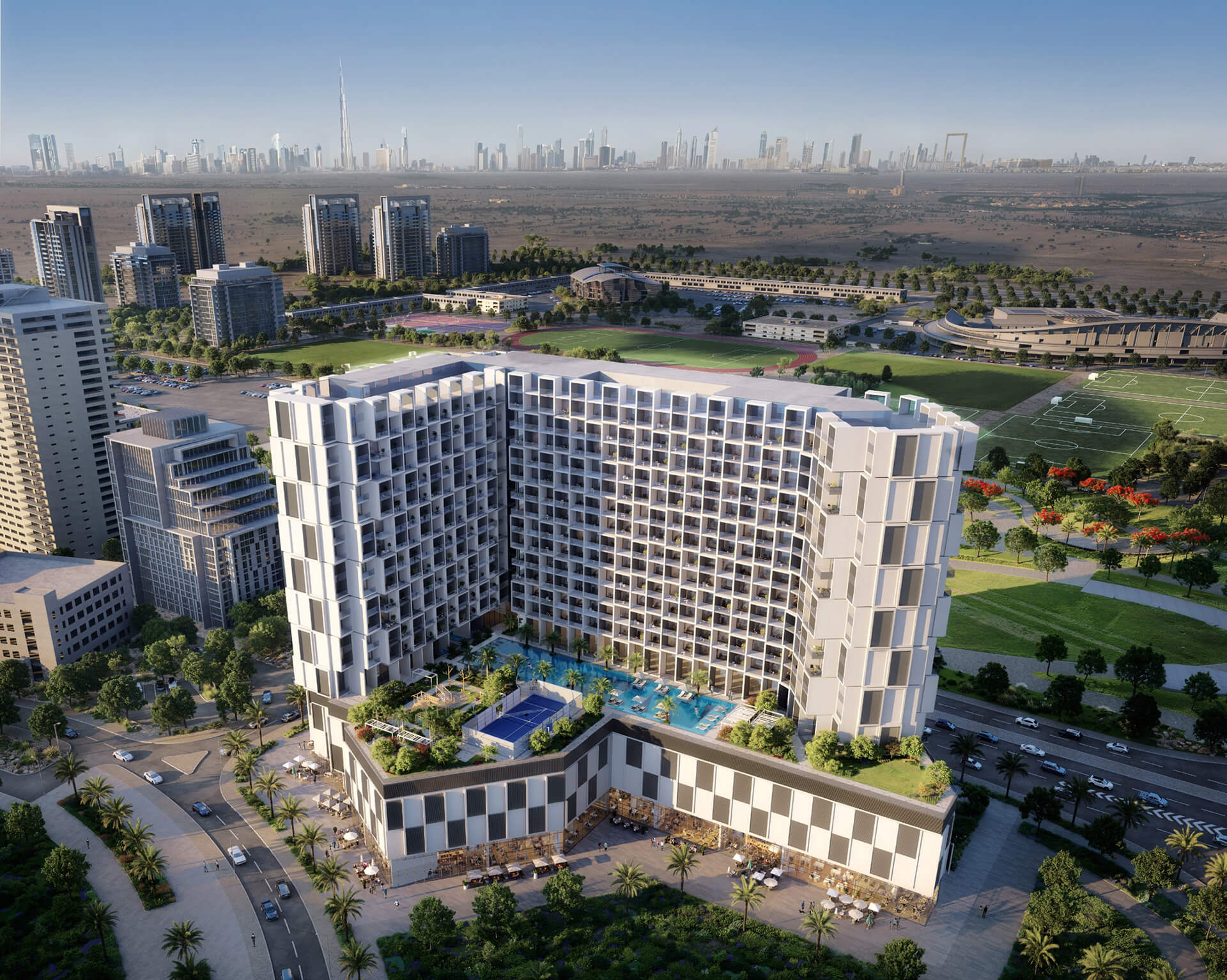
The internal courtyard of Binghatti Cullinan unfolds as a private water oasis, where landscape and architecture enter a symbiotic connection. The central pool, children's water zone, club relaxation spaces, and sports functions form a comprehensive life scenario. Natural water lines work not as decorative elements but as climatic and emotional regulators.
According to official materials, landscaping is oriented toward creating a rhythm that supports daily activity and restores internal balance. The space doesn't force movement but invites presence at a pace where every route is organized through soft transitions, greenery, and light. Here, the street doesn't invade the home but becomes part of its breathing.
Visual and spatial harmony creates conditions for life free from overload. Binghatti Cullinan doesn't offer flow but offers flow. The pool, relaxation zones, and sports areas form a single circuit where activity and contemplation coexist without conflict. This landscaping becomes not an environment but a state in which architecture and water interact as a single organ.
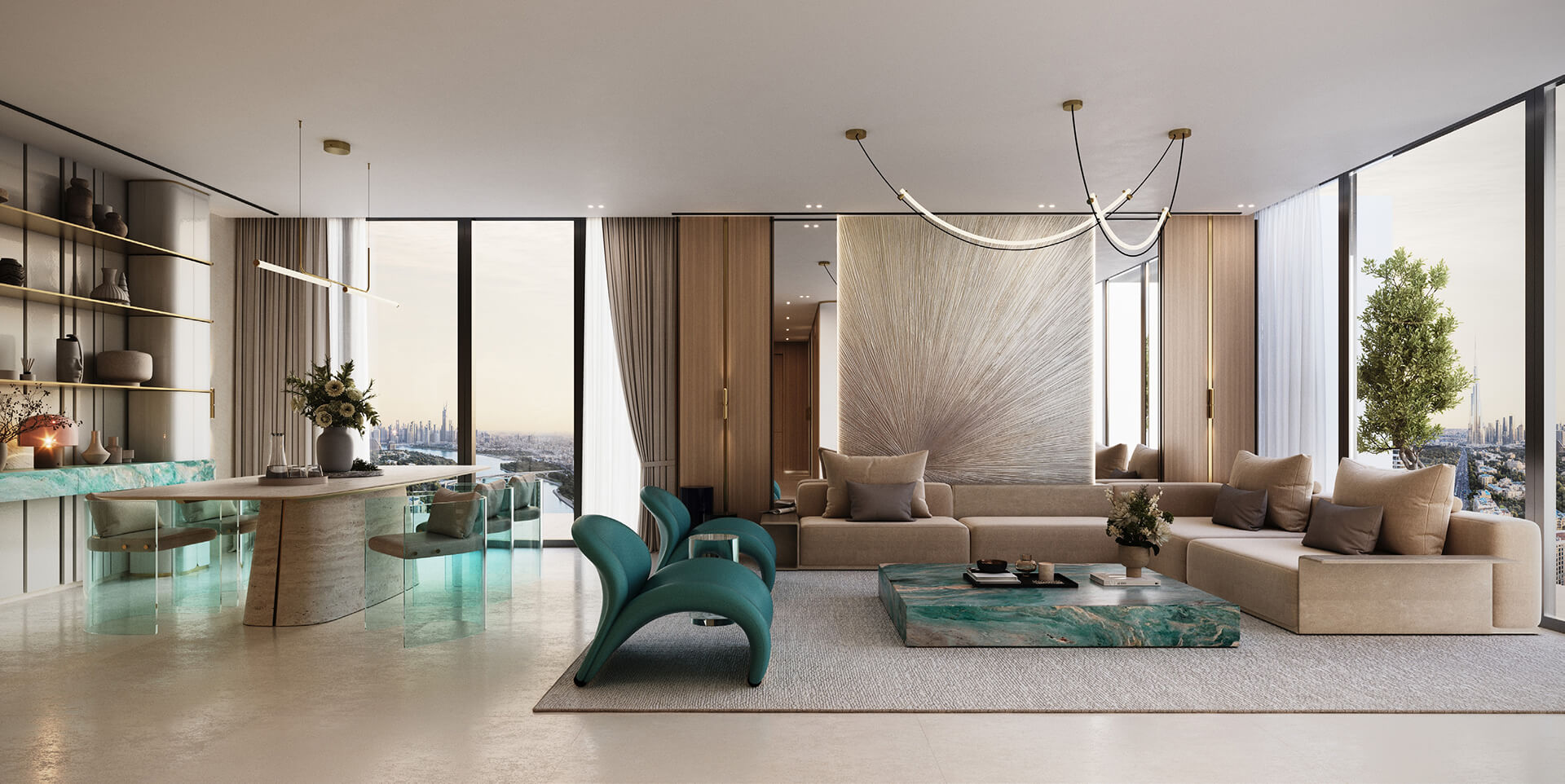
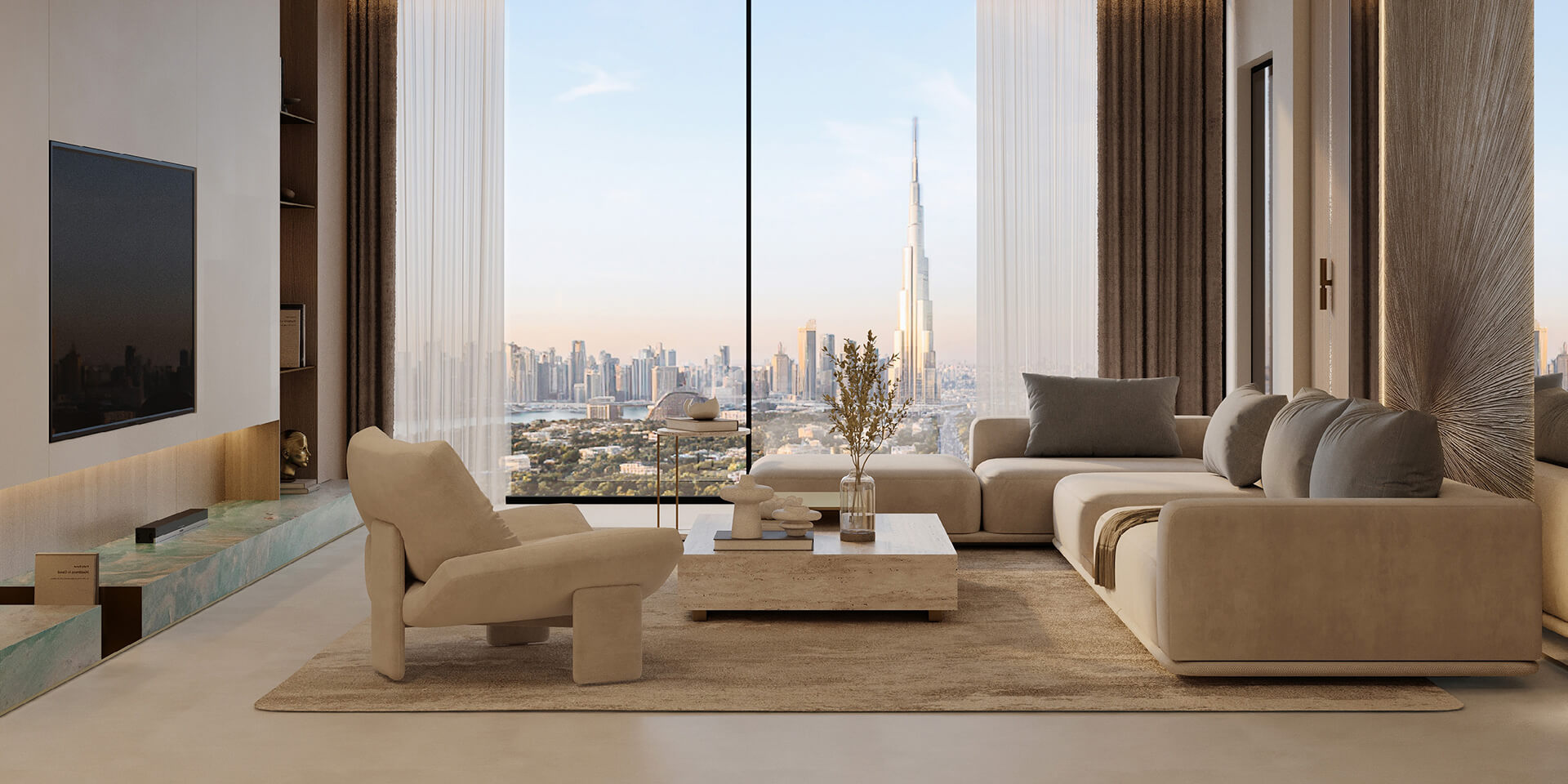
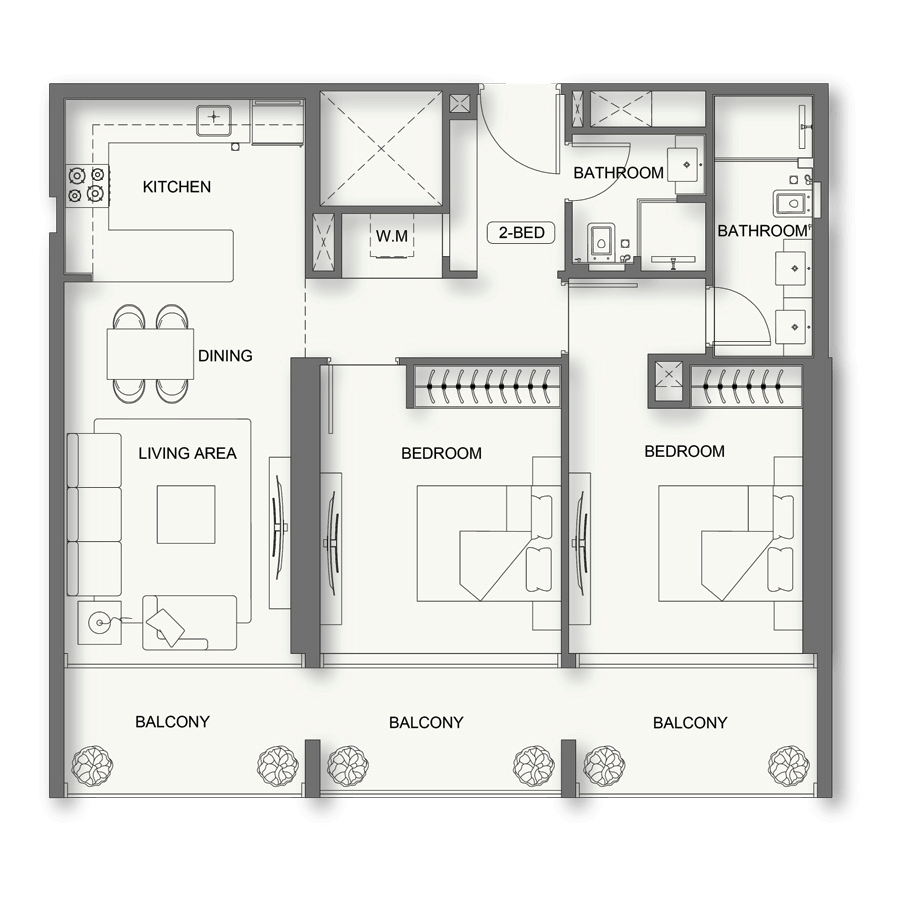
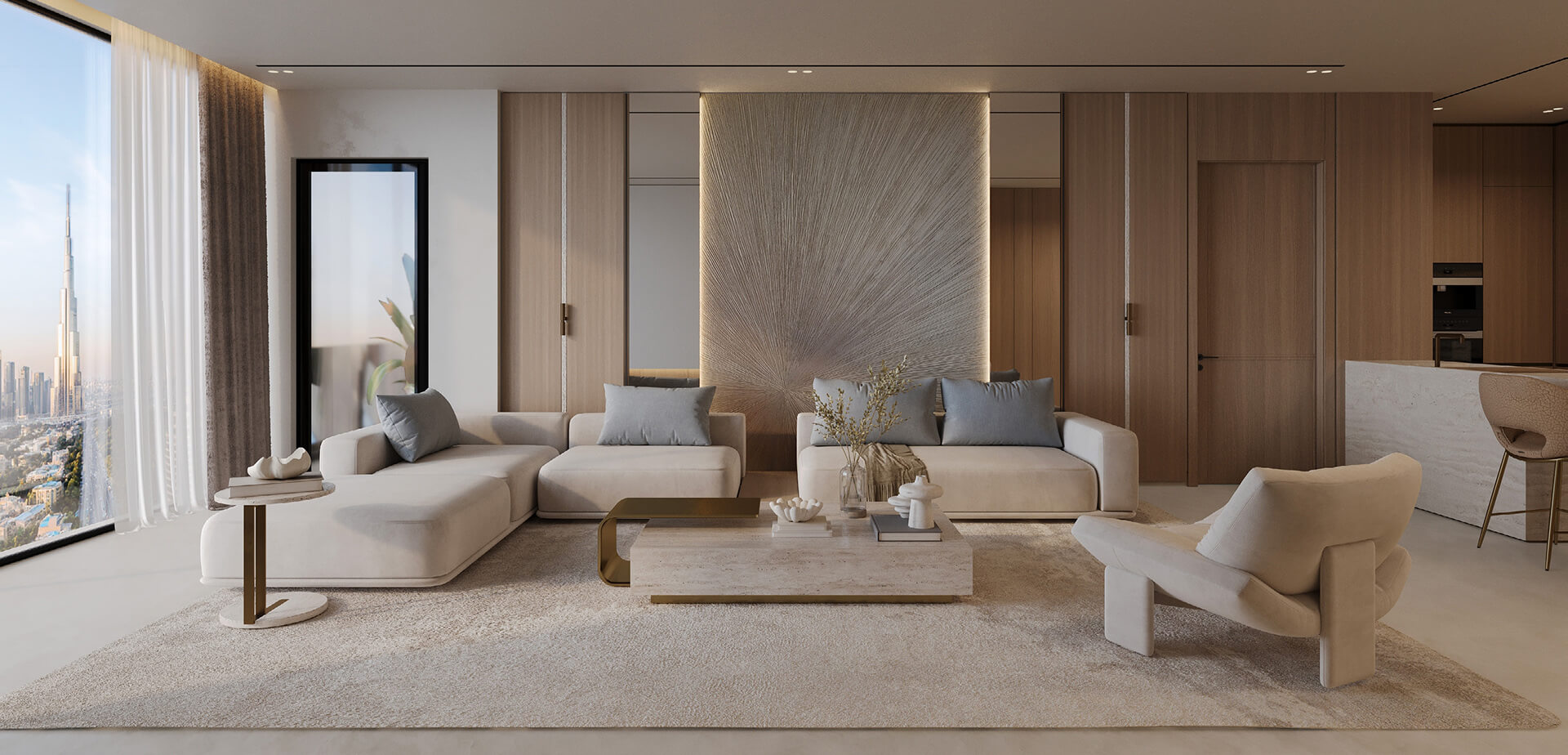
Cullinan interiors are developed as a spatial matrix where light and silence act as active materials. Panoramic views of Burj Khalifa and Downtown reveal the city without invading privacy. Neutral shades, marble textures, wood, and chrome create an aesthetic where every sound is softened, and every meter of air is filled with light.
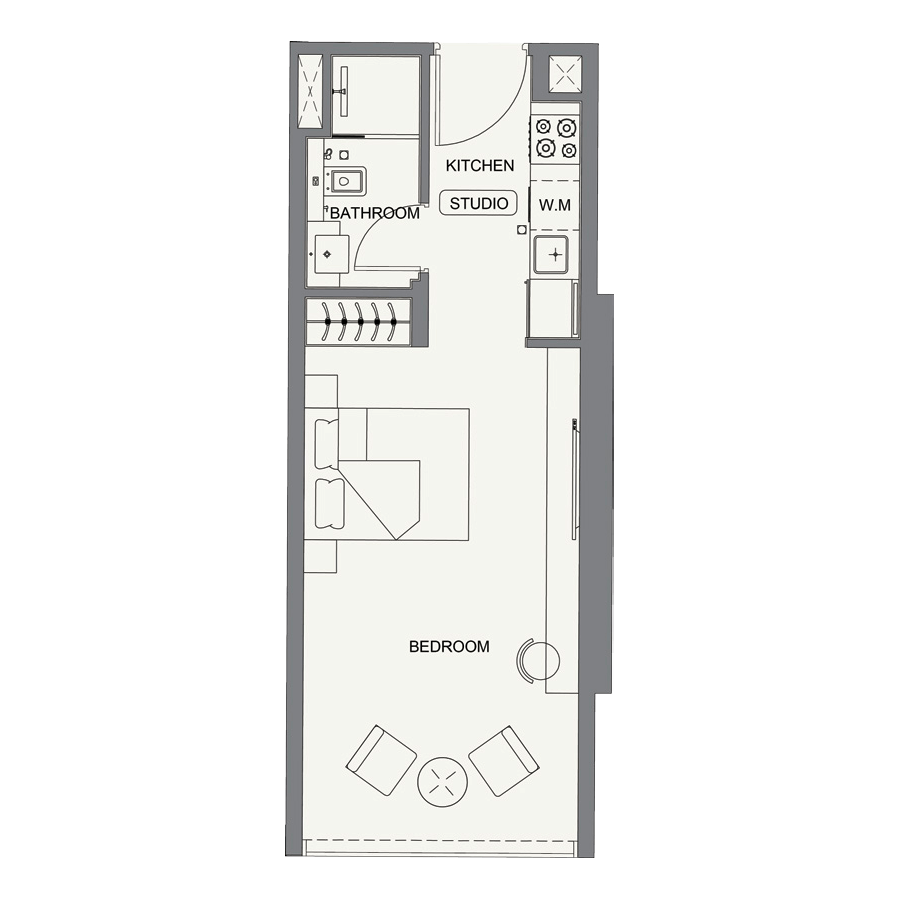
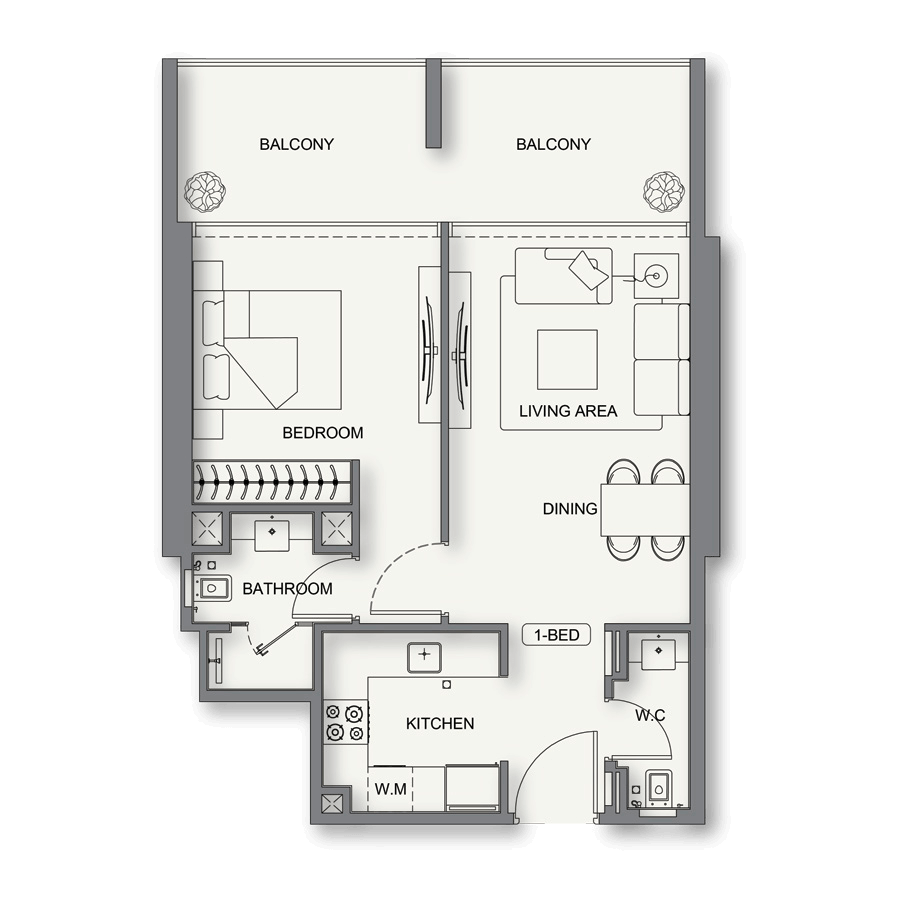
Layout solutions are based on open perspectives and clear geometry. Life in these spaces is organized not around objects but around air. Visual interfaces of interior and exterior form meditative axes where contemplation becomes part of everyday life, and light becomes an element of comfort.
Materials and proportions serve not as decorations but as language. Space doesn't demonstrate status; it affirms it through silence. The apartments manifest the idea of lightness, where architecture doesn't force but liberates.
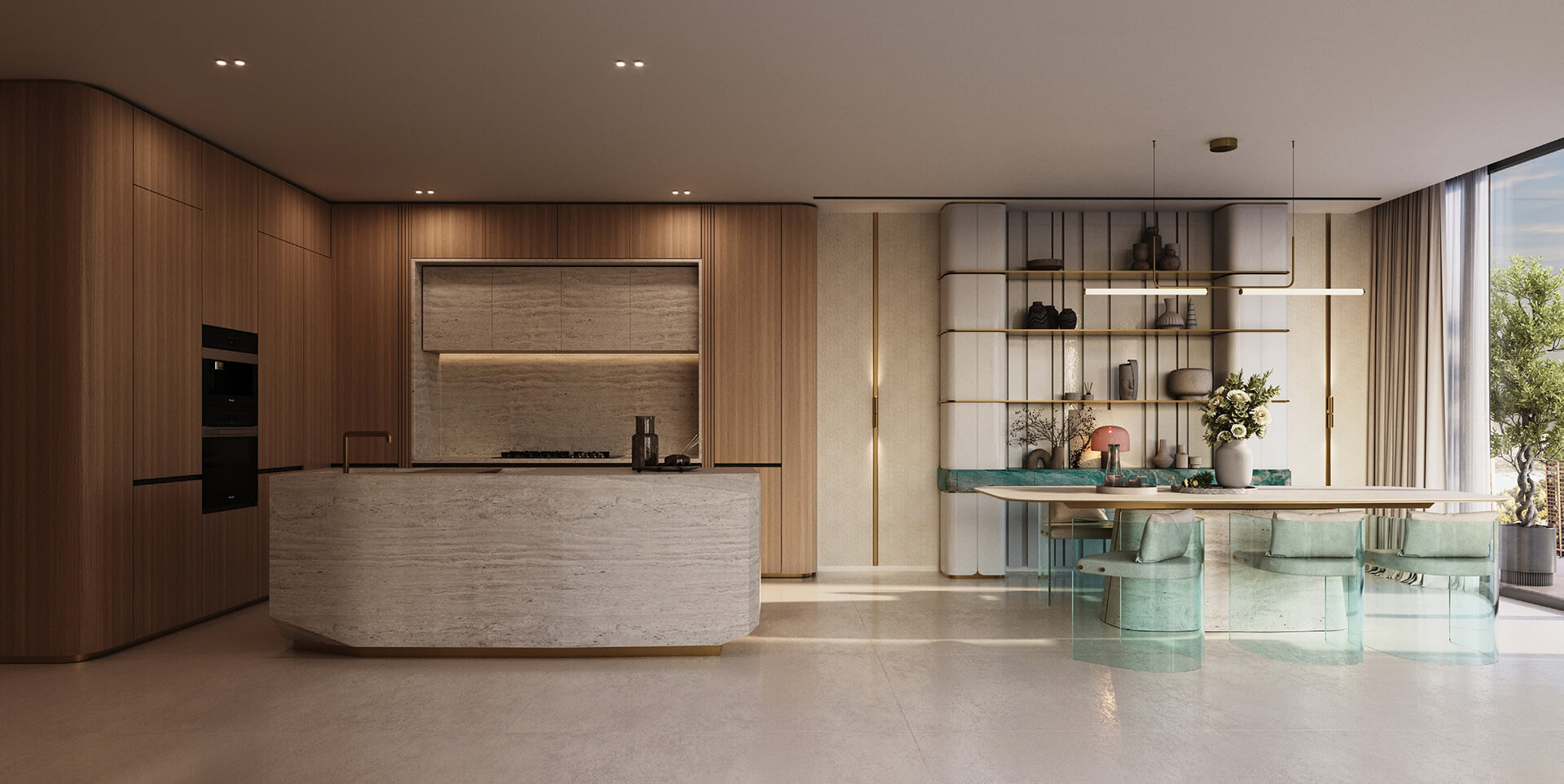
All Cullinan residences are equipped with smart systems and AI-integrated technologies, forming the idea of intelligent but unobtrusive management of domestic scenarios. The smart home doesn't intrude but adapts, creating a smooth interface between the person and space.
Climate control, lighting, and security systems function in a single circuit, configurable through intuitive interface solutions. Technologies aren't declared as an advantage but are hidden as much as possible to not destroy the aesthetic integrity of the interior and its refined silence.
The high level of energy efficiency and use of durable materials, emphasized in official documents, reveal the engineering contour of the project as a system of thoughtful longevity. These are technologies built into aesthetics, not imposed upon it.
during construction
after completion